
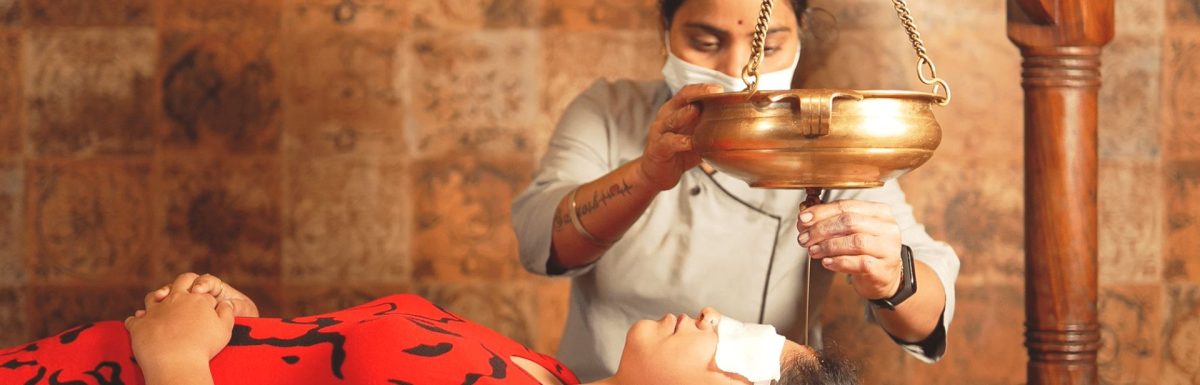
Going on a traditional Ayurvedic retreat for healing feels completely different from a vacation at a usual resort. Here, your daily life takes a different turn, consistent with Ayurvedic principles, shaping everything from the food you eat to your treatment and sleep routine.
When modern life leaves you feeling completely drained and constantly stressed, an Ayurvedic healing retreat like this can be the best way to reset. Still, you might be having questions about the actual process of these therapies. So, in this guide, we will give you a complete picture of an Ayurvedic retreat, covering every major question you might have when booking a retreat. Be sure to read till the end.
Understanding How Ayurveda Retreat in Kerala Work
Traditional Ayurvedic healing centres do not just treat the symptoms of the problem; they focus on addressing every health issue by getting to the root cause. A major reason for this is Ayurveda’s focus on individuality—it views each person as having a unique element, known as their Prakriti.
According to Ayurveda, your body works with three core bio-energies: Vata, Pitta, and Kapha. When these three energies go out of balance, you often start feeling lethargic and completely drained.
An authentic Ayurvedic retreat brings together its Ayurvedic knowledge and clinical treatments to balance out your three core body energies. Your daily routine will be consistent with your natural circadian rhythm, which will help calm your nervous system. Additionally, your life in the retreat will be free from screens, allow you to get real rest, and let herbal remedies help remove toxins from your body.
There are actually many such top-rated Ayurveda and Wellness Resorts around the world.
What to Expect at an Ayurveda Retreat in Kerala- Timeline
There are a range of options for stays at Ayurvedic retreats, from one to three weeks. You can choose one that best suits your health goals.
| Different Phases | Main Focus | Main Therapies | Diet |
|---|---|---|---|
| Phase 1: Arrival & medical checkup (Day 1–2) | Pulse check, baseline consultation, dosha check | Abhyanga, foot massage, herbal baths | Light soups, herbal teas, digestive broths |
| Phase 2: Preparatory therapy (Day 3–9) | Tissue lubrication, toxin loosening, metabolic reset | Shirodhara, Kizhi, Elakizhi, steam baths | Custom dosha-specific cooked meals, medicated ghee |
| Phase 3: Main treatment (Day 10–11) | Panchakarma purification, internal cleansing | Virechana, Basti, herbal purges, nasal therapy | Rice kanji, mung broth, restricted solids |
| Phase 4: Recovery (Day 12–14+) | Tissue rebuilding, immunity boosting, lifestyle design | Rasayana therapies, gentle massages, herbal tonics | Nutrient-dense Ayurvedic cuisine, fresh juices |
First Day at an Ayurveda Retreat in Kerala-Arrival and Consultation
Your Ayurvedic treatment starts from the day you join, with a health check-up from a resident physician. This initial check-up will influence the kind of treatment you will eventually receive.
The In-Depth Doctor Consultation
The Ayurvedic doctor, called Vaidya, starts with a traditional assessment of your body and health. They usually check your pulse (Nadi Pariksha) and inspect your tongue, as well as your eyes, skin, and digestion. From there, they look into your medical history, sleep patterns, and stress levels.
This initial health assessment helps the physicians find your specific doshic imbalances, which will eventually determine your treatment plan and diet.
Setting Intentions and Acclimatization
After your assessment by the physician, you will get a personalised daily routine along with herbal medicines. The team in the retreat will explain
your retreat guidelines, dress codes, and other important information.
Your first evening in the retreat will be light and simple. You will usually get a warm herbal bath and retire to bed early for the next morning. Ayurvedic retreats like Amal Tamara Ayurveda Retreat focus heavily on this kind of personalised and simple first night to make sure you start your stay with them with good care.
ALSO SEE- Best Time to Visit Kerala for Ayurvedic Treatment
The Standard Ayurveda Retreat Daily Schedule
Your Daily routines during the retreat will follow Dinacharya, the traditional Ayurvedic principle of syncing daily routines with the natural circadian rhythm.
- 06:00 AM: Morning gong followed by cleaning the tongue and a cup of warm herbal tea.
- 06:30 AM – 07:30 AM: Morning yoga, pranayama, and guided breathwork.
- 08:00 AM – 09:00 AM: Having a custom Ayurvedic breakfast prepared according to your dosha.
- 09:30 AM – 12:00 PM: First official treatment session (Abhyanga, Kizhi, or Shirodhara).
- 12:30 PM – 01:30 PM: Freshly prepared warm vegetarian lunch.
- 02:00 PM – 03:30 PM: Mandatory rest, journaling, or a quick doctor check-up.
- 03:30 PM – 05:00 PM: Second therapy session (localized treatments, herbal steam, or Lepam).
- 05:30 PM – 06:30 PM: Restorative yoga, yoga nidra, or meditation.
- 07:00 PM – 08:00 PM: Light dinner with prescribed herbal tonic.
- 09:30 PM: Lights out to get a good sleep.
Core Ayurveda Retreat Treatments Explained
Your treatment plan at the Ayurvedic retreat uses organic oils, medicated powders, and warm herbal compresses, all custom-made for your conditions. Certified, skilled therapists will use these to provide you with proper therapy.
Abhyanga (Warm Herbal Oil Massage)
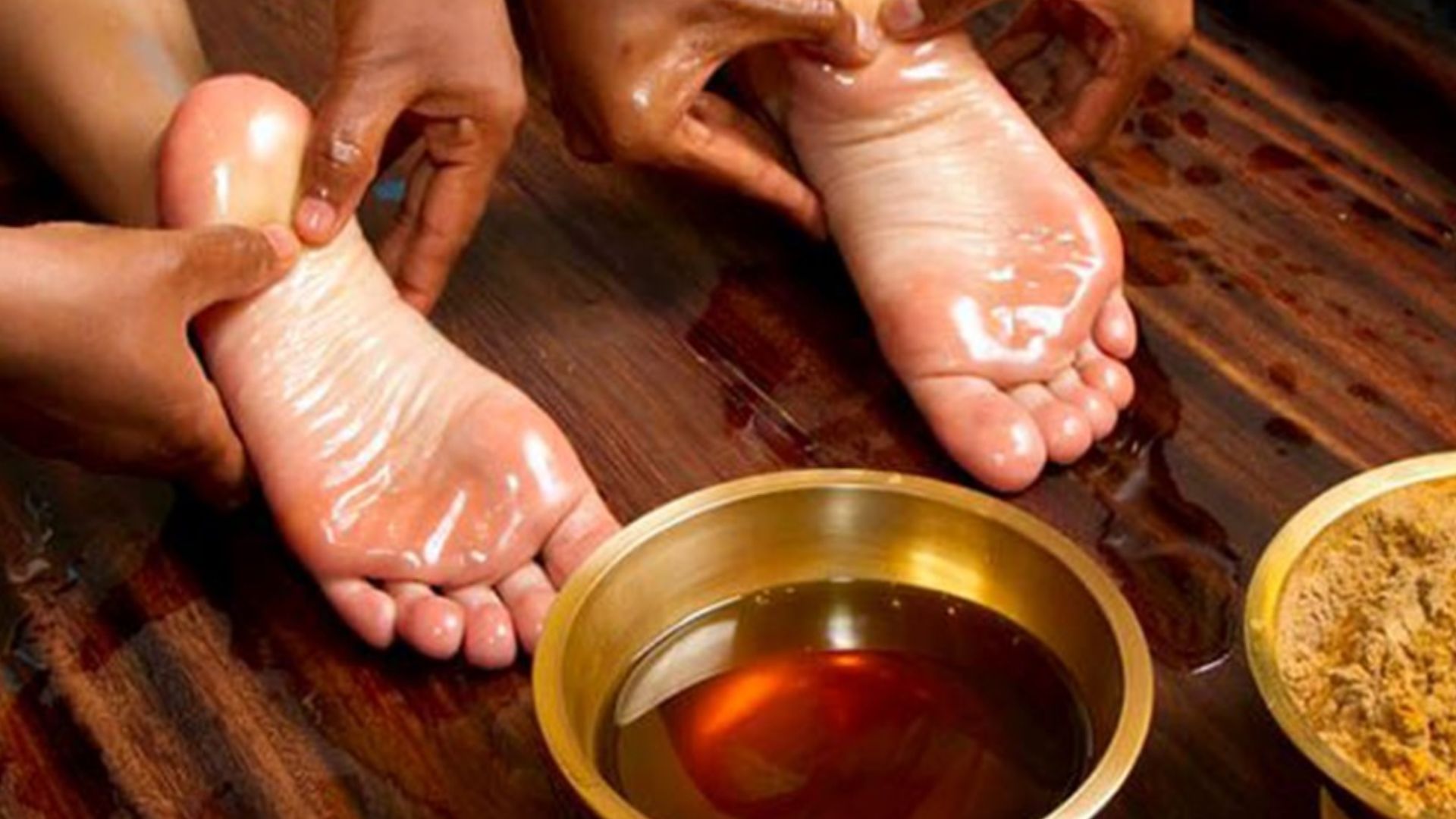
In Abhyanga, two therapists work together to massage your body with warm medicated oil from head to toe. These massages will help boost your blood circulation, relax the nervous system, and soften up the tissues.
Shirodhara (Continuous Oil Pouring)
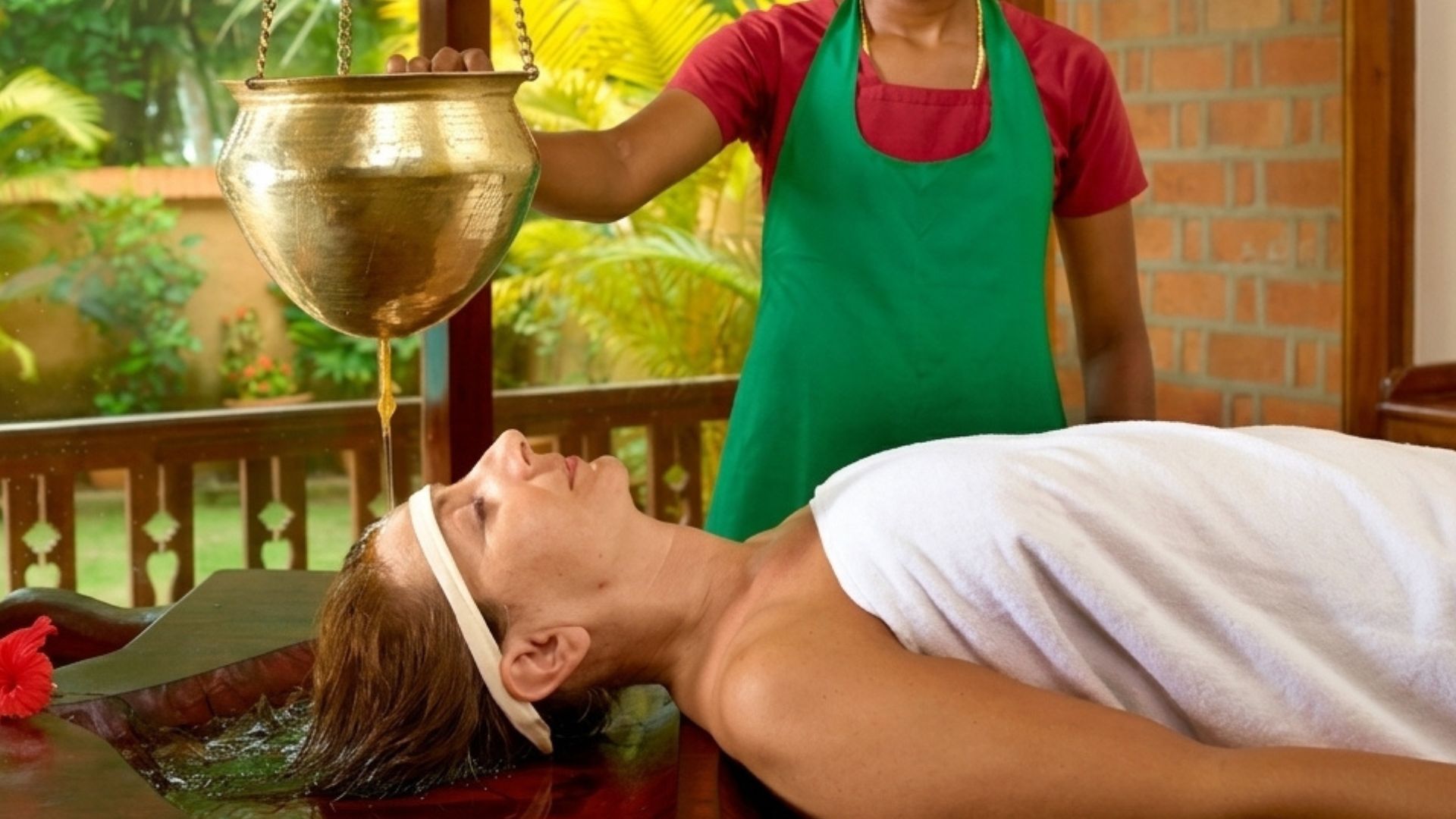
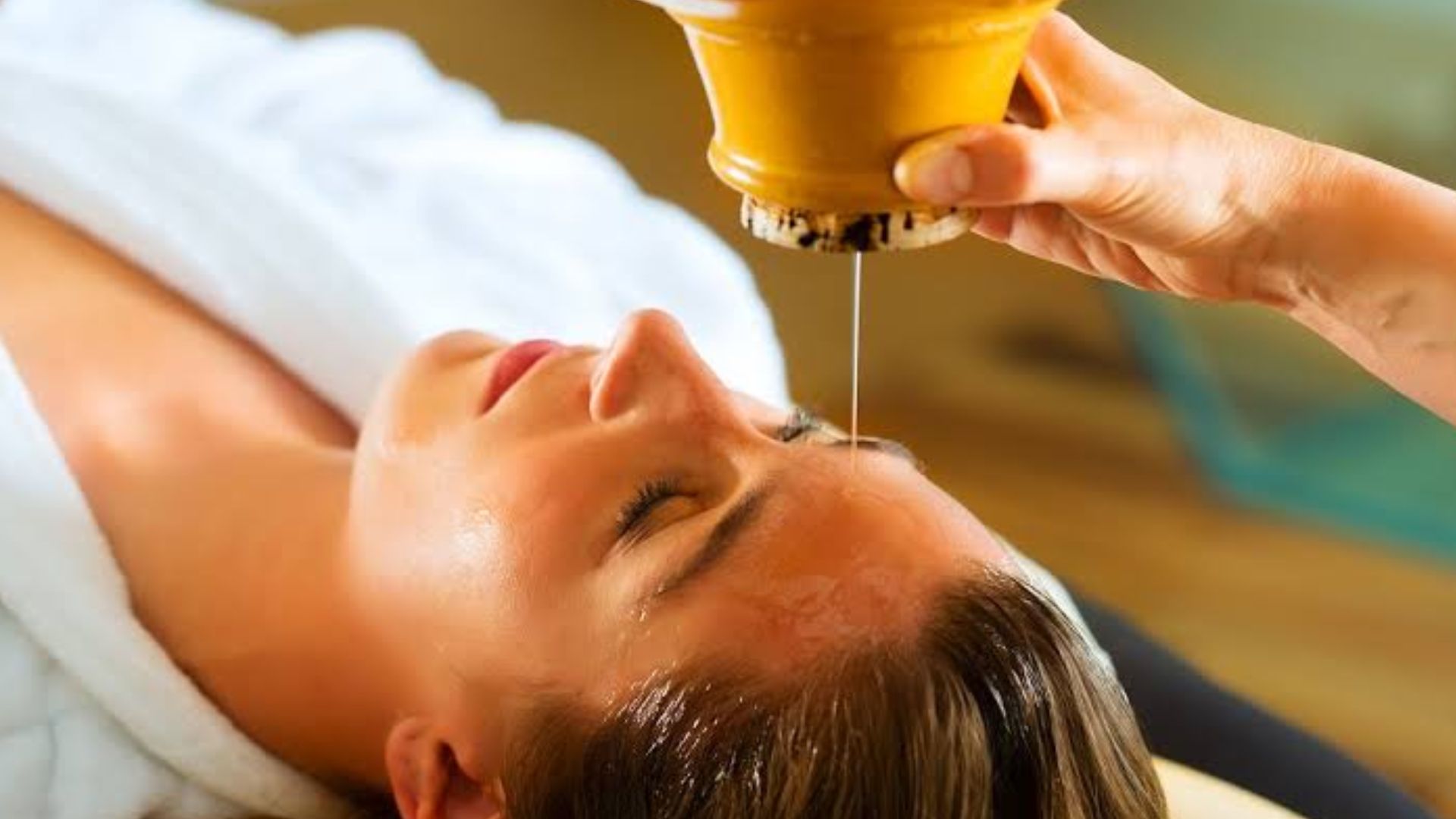
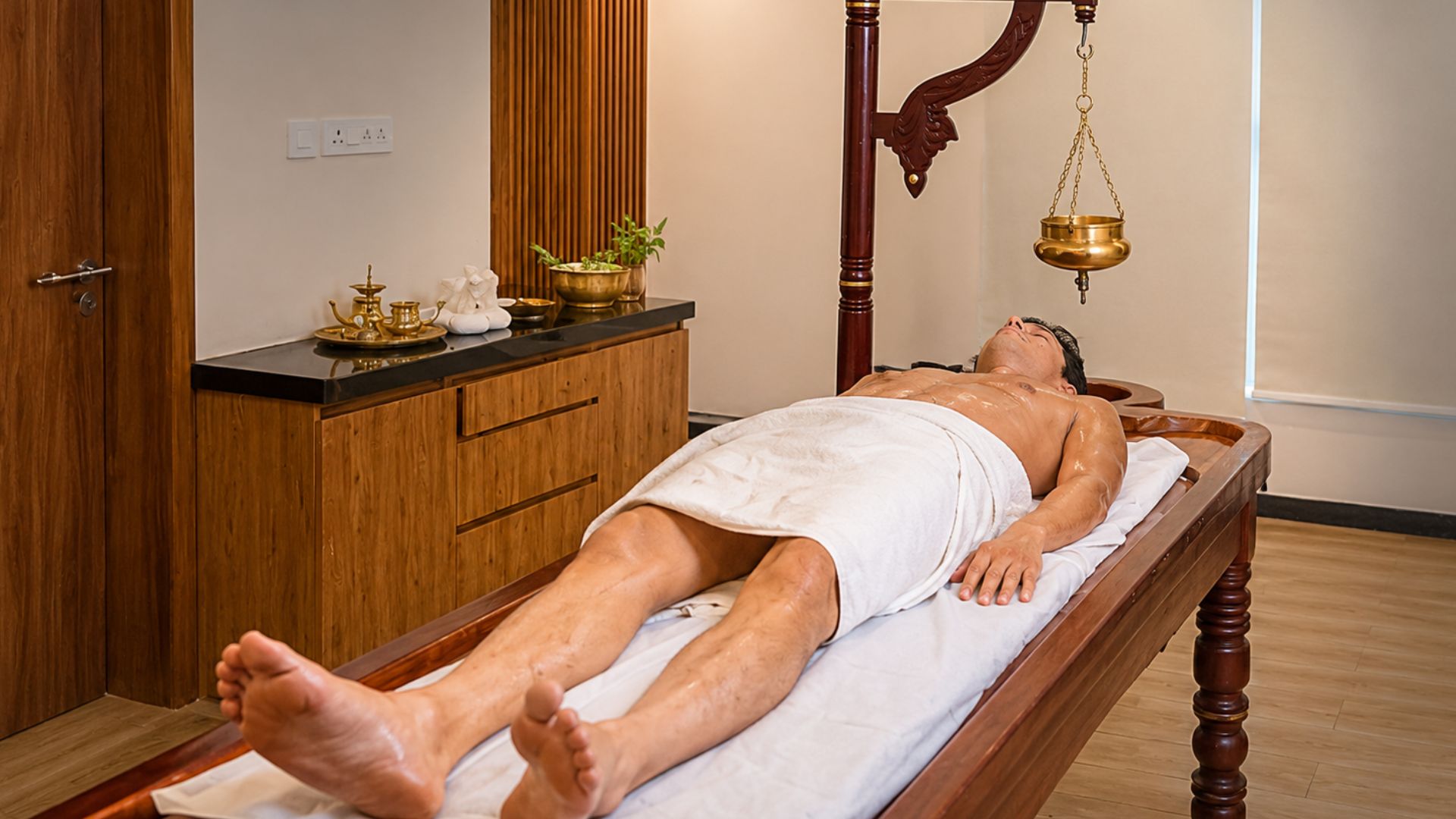
Shirodhara is a process in which a warm stream of herbal oil flows continuously over your forehead, at the level of your third eye. This gentle flow of oil on your forehead helps your mind enter deep relaxation, eases anxiety, and prepares you for a deep sleep.
Kizhi and Elakizhi (Herbal Poultice Massage)
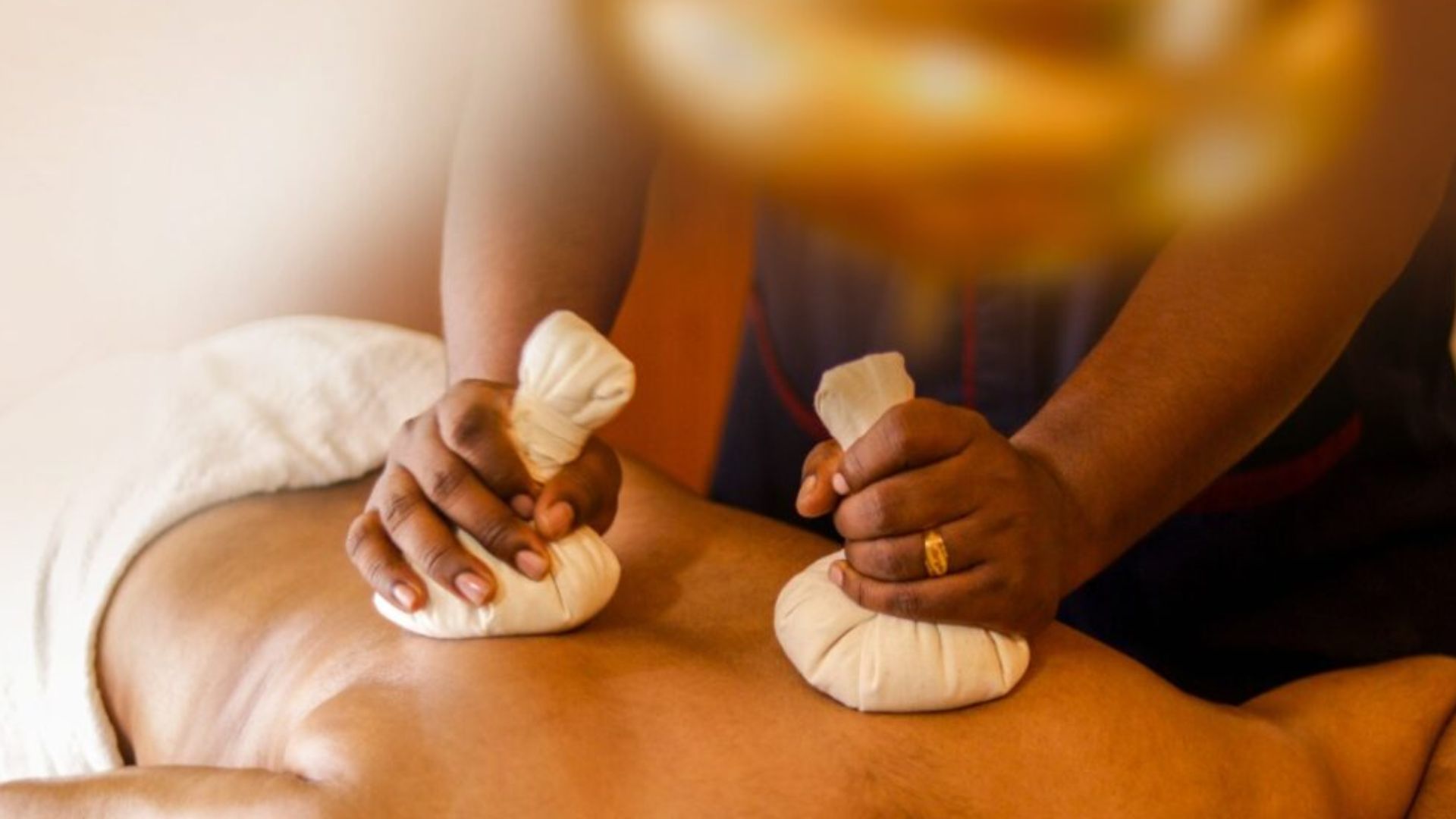
In Kizhi and Elakizhi, a warm pouch of cloth filled with fresh medicinal leaves or crushed herbal powders is pressed against your body and joints. The heat, combined with the herbs, helps reduce inflammation, ease stubborn muscle stiffness, and melt away joint pain.
Panchakarma (The Five Cleansing Actions)
Panchakarma is the main therapy in Ayurvedic medicine as it provides the deepest level of purification to your body. Residential doctors design and supervise Panchakarma to ensure it is personalised to what your body needs.
ALSO READ – What Is Panchakarma Treatment? Everything You Need To Know
Panchakarma is designed to remove waste from your cells and tissues using treatments such as herbal purgation, targeted enemas, and nasal oiling. Specialised retreats like Kalari Rasayana place importance on safely performing these authentic Panchakarma therapies with doctor supervision.
ALSO SEE-Virechana Treatment: Your Complete Guide
Kerala Ayurveda Retreat Food: Nourishing the Body and Mind
In Ayurvedic healing treatments, food is not just fuel for your body. It actually acts as your primary medicine. Instead of heavy, same meals for everyone, chefs cook fresh meals every day using seasonal, locally sourced organic vegetables.
Principles of Ayurvedic Cuisine
Ayurvedic dishes are cooked around six essential tastes to balance sweet, sour, salty, bitter, pungent, and astringent flavours in your food.
The chefs place importance on preparing warm, easily digestible meals. You will not find any use of processed items, refined sugars, iced drinks, or meats that can put stress on your digestive system.
ALSO READ – Ayurveda for High Blood Pressure-5 Natural Remedies You Can Try
Sample Retreat Daily Menu
- Breakfast: Stewed apples with cinnamon, warm ragi porridge, or a freshly made herbal mix.
- Lunch: Steamed red rice served with yellow mung dal, zucchini, and fresh coriander chutney.
- Dinner: A light pumpkin soup with cumin flatbread and a herbal tea.
If you want to know more, you can explore All Ayurveda Packages to get a complete idea.
The Psychological and Emotional Healing Process
Physical detoxification is also highly effective at releasing any emotional tension you didn’t even realise you were carrying. As your tissues start releasing waste, a lot of emotional clarity also begins to come. That is why it is completely normal to experience mood swings during your therapy. When you get those feelings and mood swings, the resident doctors and the therapist are always there to provide emotional and mental support.
In the retreat, you will also get scheduled hours of silence, which will give you space for real introspection. Spending time with yourself in silence can help release a lot of mental pressure to rebuild your emotional clarity.
Packing and Preparation Checklist for Ayurveda Retreat in Kerala
Here’s a detailed checklist to prepare for your first Ayurvedic retreat
| Category | What to Pack? | Things to Leave Behind |
|---|---|---|
| Clothing | Loose cotton outfits, easy-wash pyjamas, modest yoga wear, slip-on sandals | Tight synthetic sportswear, expensive silk clothing |
| Personal Care | Natural sunscreen, chemical-free toiletries, comfortable hair ties, wide-brim hat | Perfumes, scented lotions, complex makeup products |
| Wellness & Mind | Personal journal, favourite paperback books, reusable metal water bottle | Laptops, heavy work files, smart watches, digital distractions |
Frequently Asked Questions About Ayurveda Retreat in Kerala
1. What is the minimum stay recommended for an Ayurveda retreat?
A stay of 7 to 14 days is often recommended for effective results in an Ayurvedic retreat. Complete Panchakarma detoxification, which takes at least 21 days of treatment, is more effective.
2. Are all treatments safe for complete beginners?
Yes. Every therapy is personalised for each individual by resident doctors and is completely safe for beginners.
3. Can guests leave the retreat property during their stay?
Most of the retreat does not allow guests to leave the property during active treatment days. They are only flexible when an urgent emergency arises.
4. Is caffeine or alcohol permitted on the premises?
No. Coffee, alcohol, and tobacco can interfere with herbal remedies and liver detoxification, so they are not allowed.
5. How do guests feel immediately after completing a retreat?
Guests experience greater mental clarity, easier digestion, improved mobility, and deeper sleep, with an overall relaxed body.